
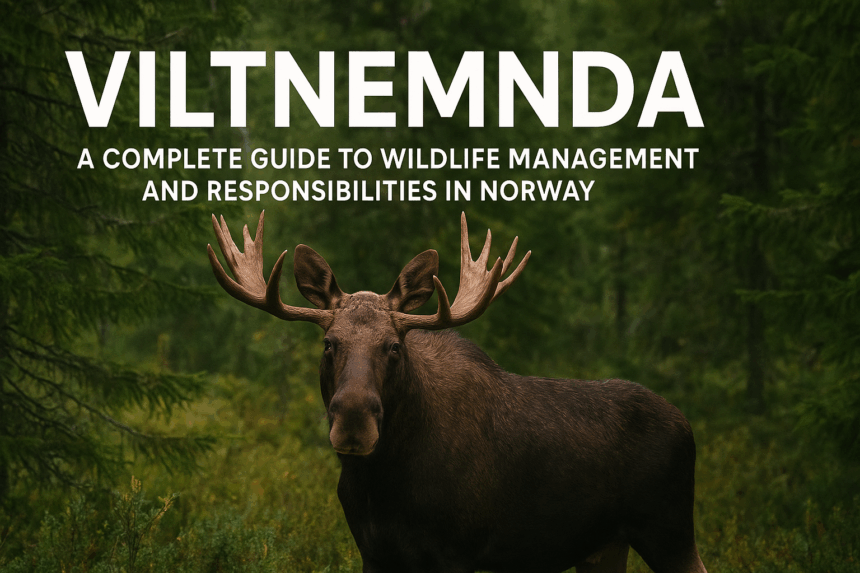
What is Viltnemnda?
Viltnemnda (literally “wildlife committee” in Norwegian) is the municipal-level wildlife management board operating across municipalities in Norway.
Established under national legislation — especially the Wildlife Act (Viltloven) and the Nature Diversity Act (Naturmangfoldloven) — Viltnemnda ensures that wildlife resources are managed sustainably, conflicts between humans and wild animals are handled responsibly, and ecological balance is maintained at the local level.
Why Does Viltnemnda Exist?
Norway’s varied geography — forests, mountains, farmlands, highways — creates frequent interaction zones between humans and wildlife (e.g. moose, deer, beavers, other game species). Managing these interactions from a central office wouldn’t be effective. Therefore, every municipality has its own Viltnemnda, enabling swift, context-aware decisions at local level.
Viltnemnda builds on a long tradition: informal local community groups historically regulated hunting and animal management. Modern laws simply formalized and regulated these practices under a legal and scientific framework.
Structure & Composition
-
Viltnemnda is typically formed by 5 (or more) members, elected/appointed by the municipal council.
-
Membership often includes people with backgrounds in agriculture, forestry, hunting, environmental management — ensuring decisions are informed by both local knowledge and ecological expertise.
-
The committee acts as the local authority in wildlife matters: issuing permits, coordinating with police, environmental agencies, landowners, and responding to incidents.
Key Responsibilities of Viltnemnda
Managing Wildlife & Hunting Regulation
-
Viltnemnda sets local hunting quotas and determines when and how many animals (like moose, deer, beavers) may be legally hunted, based on population data and ecological assessments.
-
They ensure hunting is sustainable — balancing between human use and long-term wildlife conservation
-
Handling Wildlife–Human Conflicts & Emergencies
-
In case of wildlife road-collisions (e.g. a moose hit by a vehicle), fallen or injured animals, or dangerous wildlife sightings — Viltnemnda handles rescue, humane dispatch, carcass removal, or wildlife relocation when needed. They also manage “skadefelling” (damage permits) — for example when wild animals pose threats to livestock, crops, or property. Even then, they try non-lethal solutions first, and lethal clearance is considered only under regulated conditions.
Conservation, Monitoring & Habitat Protection
-
Viltnemnda monitors wildlife populations, collates data on game, accidents, and habitat status — helping formulate annual or multi-year “bestandsplaner” (population/herd plans).
-
They advise municipalities on land-use decisions (construction, road planning) to protect habitats, migration corridors, and biodiversity.
Community Engagement and Public Awareness
-
Villagers, farmers, drivers — ordinary citizens — often report wildlife accidents, sightings, or damage. Viltnemnda works as the bridge between citizens, authorities, and national agencies.
-
They may also coordinate educational and conservation initiatives, promoting coexistence between humans and nature.
-
Challenges & Modern Pressures
Despite its structured role, Viltnemnda faces several challenges:
-
High workload: With increasing traffic, expanding urbanization and human expansion into forested areas — wildlife collisions and conflicts are rising.
-
Balancing conflicting interests: Farmers, hunters, environmentalists — each group has different priorities. Viltnemnda must balance wildlife conservation with human livelihoods carefully.
-
Limited resources & volunteer-based efforts: Many Viltnemnda members are volunteers or part-time; emergencies may need quick action (injured animals, roadkill) where professional capacity is limited.
-
Ecological and climate changes: Changing habitats, migration patterns, rising wildlife populations — managing this dynamic environment demands adaptive, science-based policies.
Why Viltnemnda Matters — The Bigger Picture
-
Local, context-aware management: Instead of one-size-fits-all national policies, Viltnemnda allows decisions tailored to each municipality’s ecological conditions, human-wildlife interaction patterns, and land-use demands.
-
Sustainable coexistence: By regulating hunting, managing conflicts, and protecting habitats — they help maintain ecological balance while safeguarding human safety and livelihoods.
-
Community engagement: Citizens are part of the process — reporting accidents, participating in conservation — which helps foster respect for nature and community responsibility.
-
Legal & ethical wildlife governance: Under national laws, wildlife is treated as a shared resource; Viltnemnda ensures regulations are fair, transparent, scientifically informed, and ethically grounded.
In short: Viltnemnda plays a vital role in ensuring that human development and wildlife conservation in Norway move hand-in-hand, not at each other’s expense.
Summary
Viltnemnda — the local wildlife committee of Norway — serves as the backbone of municipal wildlife governance. From issuing hunting permits, managing wildlife emergencies, ensuring sustainable animal populations, to resolving human–wildlife conflicts — Viltnemnda stands at the crucial intersection of ecology, law, community, and public safety.
In a world where environmental pressures, climate change, and human expansion are growing — the model of local, law-backed, community-oriented wildlife management embodied by Viltnemnda offers valuable lessons in balance, responsibility, and coexistence.
